quarta-feira, 3 de junho de 2015

Uruguay, the eficiency in criminality reduction

All around the world, especially in Latin America, the drug trafficking is a practice which causes significant problems, like the criminality growth.
In Brazil, Colombia, and Mexico or even in America, the war against drug dealers keep making lots of victims and provoking many deaths, year by year.


In USA, more than 15.000 people die by murder all years, a strange data for a country which have one of the greatest infrastructures of security in the world.
With the biggest population of prisioners in the planet, America, the "freedom country", don't achieves the dream of violence end.


That´s because, like in many other countries, the United States government keep trying to fight against the drug trafficking and criminals, a method, that many people knows that doesn't works.
Fight against criminality just promote the violence and develop the criminal's techniques to scope by police.


In Latin America, many countries which suffer by the crime keep trying to arrest drug dealers and prohibit drug consume, and between this war, many innocent people suffer and die day by day.
Corrupt and violent officers are one of the guilty of the crime maintenance in the continent.
In Uruguay, rather repress the drug trafficking, the government decided to try another possibilities to solve the problem.


The progressist and charismatic Uruguayan president, Pepe Mujica, in 2013 legalized the production and sell of marihuana.
The conservative mind in most part of the countries keep making people think that the legalization is something bad for society, and do not recognize that the war against drugs, like marihuana for example, make more victims than the legalization and consume.


According to government's data’s, the legalization provoked a significant reduction of violence and deaths by trafficking in the country.
Some data from this year comproved that the criminality in Uruguay went down after the legalization.
Uruguay, an example for latin americans countries!

André Felipe Maria

terça-feira, 12 de maio de 2015

Asunción, the amazing paraguayan capital

The world is full of many interesting places to visit and apreciate some cultural identities and diferent ways of live.
Usually, people are used to travel to famous, rich and huge cities, like New York, Paris or London, where the options of enterteinment are various and the infrastructure of tourism make them atractive.
There are some cities which aren't in the media, but can offer good options of places to visit and diferent experiences aswell. Those cities must be remembered by travelers and this post will show how amazing one of those cities is.


Paraguay, an eight million people countrie, located in the midle of South America, is home of one the most interesting citie in the continente.
The modest paraguayan capital, named Asuncíon, is one citie which can provide a great vacation time for travelers who love to know new places.
The city transpire culture and can be marvelous for who love history, archtecture, arts and shopping.
Not to famous, the citie hide lot's of places, buildings and options of enterteinmente, which will be shown in this post.
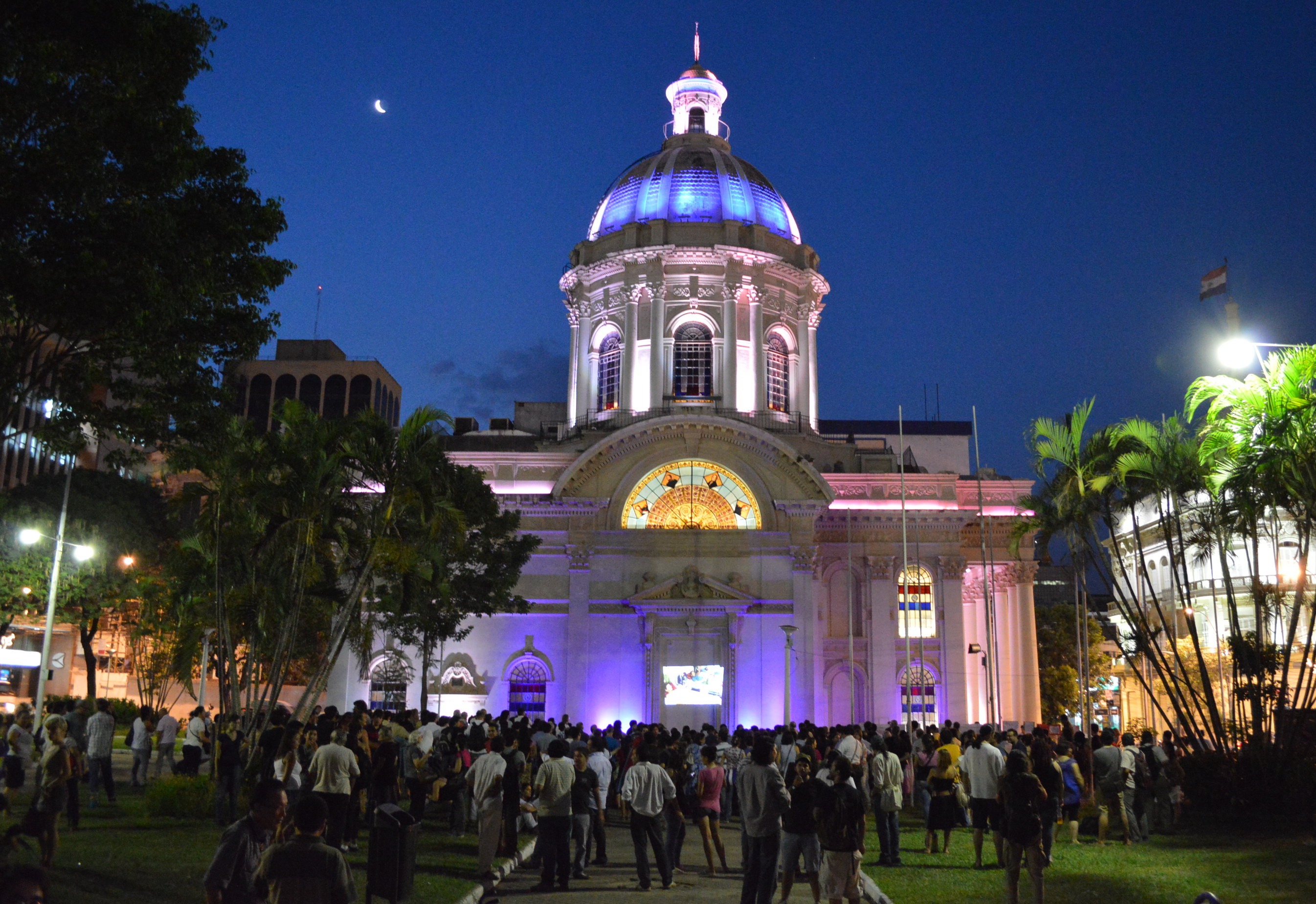
For first, one atraction that couldn't be forbiden is the Government Palace. Located next to Paraguai River, the palace's archtecture is beautiful and the garden which soround the place is very well cared.


For art lovers, the Museum of Fine Arts can be a great option to visit.
In this little museum, people can find great art works made by artists from Italy, Spain, Latin-America and other countries.
The building have a pretty look and rich details in the archtecture style, and is located next to restaurants and stores, for tourists who want to have a break.


For who wants to appreciate the marvelous Paraguayan culinary, can go to Bolsi, an amazing restaurant in downtown Asunción, which was elected one of the best country restaurants.
There, travelers can find the most famous food in the nation, the tasty Paraguayan soup. Curiously, the paraguayan soup is solid, thus is not specifcly a soup, but a kind of corn cake. Tourist ensure that's delicious!


If you want to look up some religious art , in Asunción you can go to Cabildo Museum . This marvelous place, ex-congress building, contains a big collection and impresses by its rich architecture. And, as well as the Government Palace, at night, the building gets more beautiful with a marvelous lightening.


The Heroes Pantheon is an interesting place made by the combination of religion and paraguayan history.
Built to be a church, this attraction today is used as a religious place and, in the same time, a memorial of important nation heroes. The Pantheon Building impresses visitors by its wonderful details.


In addition to all those amazing tourist points, Asunción is home of greener parks, many other restaurants and museums, beautiful churches, crossed by the wonderful Paraguay River, and offers lot of options to shopping, big shopping centers and fairs where tourists can find products with low price.
André Felipe Maria

segunda-feira, 11 de maio de 2015

Carlos Latuff, Um dos grandes expoentes do cartunismo na América Latina

O Brasil possui muitos talentos artísticos de grande renome. Algumas dessas personalidades fazem uso de sua influência para exporem sua opinião e manifestarem seu ativismo político por meio de suas representações artísticas, como músicas, quadrinhos, poemas ou charges.
As bandeiras defendidas por essas personalidades são as mais diversas possíveis, abrangendo causas de interesse público, como manifestações, opiniões populares e causas sociais.


Dentre os grandes nomes da arte e do ativismo político, para mim, Carlos Latuff é um dos que possuem maior clareza em relação à mensagem que deseja transmitir, procurando sempre expor seus posicionamentos através de cartoons, ironizando políticos, relatando fatos históricos e acontecimentos de interesse público.

Nascido em 1968 no Rio de Janeiro, Latuff é adepto à política de esquerda e é um grande defensor dos direitos das minorias e um crítico veemente da situação social e política não só no Brasil como também no mundo.
É admirável a preocupação que o cartunista exerce diante das desigualdades sociais e injustiças presentes na sociedade contemporânea global.

Mundialmente reconhecido, Latuff é um exímio apoiador da causa palestina, tendo feito por intermédio de seus charges, duras críticas ao governo israelense e à polêmica ocupação do Estado da Palestina por cidadãos israelitas na metade do século XX.

Crítico também das políticas neo-liberais, do imperialismo e da hegemonia norte-americana e européia, Latuff produz charges nos mais variados idiomas, para que pessoas de outros países também possam se identificar com seus trabalhos, que muitas vezes abordam questões sociais, políticas e econômicas de outros países.


O cartunista é também um grande defensor das políticas de inclusão social na América Latina, manifestando em suas charges seu apoio aos estadistas latino-americanos e realizando duras críticas aos lideres regionais adeptos ao liberalismo econômico, que mantêm relações com os Estados Unidos.


Os assuntos trabalhados pelo gênio Carlos Latuff em suas charges são impossíveis de serem abordados em apenas um artigo, tamanha diversidade de assuntos de interesse nacional e mundial que o cartunista traz em suas obras.

Movimentos sociais, igualdade social, diversidade racial, imperialismo, colonialismo, direitos humanos, criticas à mídia corporativista brasileira, críticas à burguesia, defesa à soberania latino-americana, critica aos EUA, critica às ditaduras no Brasil e na América Latina, e adesão à causa palestina, são alguns dos muitos tópicos apresentados pelo cartunista em suas críticas.


É admirável o nível de genialidade do artista, seu alto senso crítico e suas habilidades com a ironia. Suas charges muito bem trabalhadas são de fácil entendimento e expõem de maneira clara a mensagem que Latuff deseja transmitir.


Para os interessados no assunto que desejarem conhecer um pouco mais sobre Carlos Latuff, podem acessar sua página no facebook chamada Latuff Brasil, e conferir noticiais relacionadas à política nacional e internacional, e visualizar postagens atualizadas de seus trabalhos que podem também ser facilmente encontrados no Google.

Latuff é sem dúvida um dos mais geniais cartunistas do mundo, tamanha sua abrangência nacional e internacional. Ele é um exemplo de ativista e um dos maiores defensores dos direitos humanos e das minorias oprimidas, tal como um veemente crítico de toda e qualquer prática que fira a ética e a dignidade humana.
André Felipe Maria

sábado, 9 de maio de 2015

El origen del nombre “Venezuela”

Como muchos saben, Venezuela es un país en el norte del continente sudamericano que es bañado por las aguas del Caribe.
Sus bellezas naturales, como las payas, islas y forestas, así como su diversa y multicultural capital, Caracas, hacen de Venezuela un país muy interesante y en el mismo tiempo, atractivo para turismo.
Mientras muchos conozcan el país, pocos saben del interesante origen de su nombre.
Con una de las historias más ricas del continente y una de las banderas nacionales más bellas del mundo, Venezuela es muy más que la media diz, y tiene mucho a presentar al mundo.


Venezuela, así como los demás países del continente latino-americano, sufrió el horror de la colonización y exploración de las naciones europeas, y así se originó su nombre.
Le dio el nombre "Venezuela" el cartógrafo italiano Américo Vespucio, descubridor de América, el continente que recibió su nombre en su homenaje.
En las expediciones españolas, las cuales Américo fuiste uno de los integrantes, en el año de 1499, los conquistadores avistaran en la costa del Lago Maracaibo algunas viviendas de los pueblos nativos, las cuales estaban sobre las aguas.


Las viviendas sobresalientes de la agua hicieron el conquistador italiano Américo Vespucio recordarse da la ciudad de Venecia, en su país de origen. Eso le dio inspiración para llamar el nuevo país de Venezuela, que en italiano significa "La pequeña Venecia".
Así surgió el nombre del nuevo país latinoamericano, famoso por sus increíbles bellezas naturales como el Salto Ángel y la Isla Margarita, y claro, sus gigantes reservas de petróleo.
André Felipe Maria

sábado, 14 de março de 2015

O país onde não existe McDonald's

A tradição é sem dúvida um dos fundamentos mais valorizados no continente latino-americano, uma região contrastante, onde as inovações e o conservadorismo se misturam.
O poder da formação cultural de um povo muitas vezes é subestimado, mas na realidade, é capaz de ditar regras e potencializar ações nunca imaginadas.
Muitos podem até achar que a influência das empresas multinacionais globais é inevitável e que todos os países, especialmente os subdesenvolvidos, aderem facilmente às estratégias marqueteiras de tais corporações. Mas existem exceções.


É nítido que tais empresas sejam poderosas e que sua influência abranja a maioria gritante dos países, tais como o Brasil, o México, a Argentina, dentre outras nações emergentes que aderem ao neo-liberalismo e à política do consumo.
Embora o monopólio e a hegemonia dite regras e estabeleça padrões de consumo e comportamento, sempre existe alguns "nichos" onde a grande corrente hegemônica não consegue penetrar.


Já parou para pensar que empresas multinacionais como o McDonal's não são tão poderosas como parecem?
Líder em vendas no Brasil, sendo uma das maiores franquias do mundo, presente em mais de cem países, a imponente e influente rede de fastfood perdeu uma batalha para a Bolívia.
Isso mesmo. Um dos países mais pobres e subdesenvolvidos da América do Sul conseguiu resistir às estratégias de marketing e ao poder de uma das maiores corporações norte-americanas.
Mas como?


O que melhor explicaria a derrota da poderosa rede de fastfood seria simplesmente o alto grau de tradicionalismo existente na Bolívia.
Após diversas tentativas em expandir seu mercado nas principais cidades do país, o McDonald's se viu em um grande abismo, obtendo prejuízos alarmantes e um grupo consumidor pífio, comparado à outros países onde a empresa é um sucesso em vendas.
 No ano de 2002, um a um, todos os restaurantes da rede foram fechados na Bolívia, devido à situação  financeira insustentável em que se encontravam à anos.


Severamente rejeitada pela população local, a rede norte-americana foi vítima da baixa demanda por seus produtos e se viu obrigada a "jogar a toalha".
Faltou expertize por parte do McDonald's ao não se prontificar em pesquisar e conhecer melhor o marcado e o público consumidor daquele país.
Ao menos deveria saber que 60% da população boliviana é indígena, e sendo assim, não possui interesse algum em gastar dinheiro com comidas industrializadas.


A população boliviana se recusou a aderir à cultura alimentar norte-americana, pautada no consumo exacerbado de alimentos quimicamente manipulados e industrializados.
De acordo com a tradição do país, os alimentos devem ser naturais e preparados ao gosto local. 
Os bolivianos em sua grande maioria não confiam em redes de fastfood, pois acreditam que os alimentos comercializados por essas empresas possam fazer mal a saúde e não são de boa procedência.


Além de suspeitar da qualidade dos alimentos fornecidos pelo McDonald's, a população do país andino não confia em comidas preparadas em tão pouco tempo, e também é extremamente tradicionalista e patriota.
Um boliviano dificilmente trocaria um prato típico de seu país por um lanche padronizado e produzido ao modo norte-americano.
Por lá, a população é doutrinada por uma cultura sócio-politica anti-imperialista e simplista, onde os ideais de consumo pregados pelas corporações multinacionais não conseguem penetrar.
O que parecia impossível se sucedeu. Um país modesto da América do Sul deu um "tapa na cara" do monopólio corporativo norte-americano e se mostrou firme diante do imperialismo, afirmando-se como uma nação que não se deixa manipular por anúncios publicitários, colocando um freio na doutrinação cultural praticada pelos EUA na América Latina.
André Felipe Maria

sexta-feira, 13 de março de 2015

UPP’s at Brazilian favelas: The fascist ideology in Brazil

Most people who knows Brazil are used to associate the country with marvelous beaches, pretty women’s and parties, a lot of parties.
The fame of Brazil (the country which people were used to associate as the un-development and the poverty) is changing constantly and getting better by the time, especially after the success of the World Cup 2014.
The event brought lots of foreign tourists from many places in the world to the country, who could saw how well prepared Brazil were to “receive the world”. They could see our fantastic’s stadiums and the structure of transport which were prepared specially for them.
During the event, the country could earn millions of dollars and change the polemic fame across the World Cup and the speculation about a disaster in terms of organization and security.
As most part of people knows, Brazil is one of the most violent countries in the planet, where 50.000 people are killed every year, in a growing process. But, the government prefers to fake the reality rather promote public politics to solve the problem.


Brazilian people, especially from the high and middle class, are adapted to support death penalty and coward punishments to criminals who stole and kill people all single day. Most of them think that the murdering statistics are only poor criminals fought, but forget how violent are our cops and the high level of dishonesty which are across the politic and high economic class.
The criminality is strongly related to the Brazilian sad history of racial discrimination and slavery, an important detail that the society never stops to think about.
In the beginning, the Portuguese settlers brought lots of prisoners from Western Africa to the new continent, to sell, slaver and threat like property.
After three hundred years of disgrace, exploration of slavery labor and fights between the resistance of black workers and white settlers, in 1888 was built a law prohibiting the slavery and making the black people free. But free for what?


Removed from their home countries in the past, after the “freedom”, black ex-slaves were spread on the street without housing, education, job or any basic elements to build a new life with quality.
Part of them tried to look for a job, but most part couldn’t find any conditions to have a proper, honest and forefeeling life. The prejudice and the stereotype across the black people during the period, when nobody were able to give them opportunities, built a legion of homeless, miserable and unemployed ex-slavers.
A little part of blacks were employed by rich farmers by a lower price than white employees, in other words, working as slaves to the same settler, but legally.
But, the huge number of them were obligated to move to big cities, living in low quality houses, wherein some of them were obligated to get involved on criminality and prostitution to survive.


Nowadays the low quality housing, built in the beginning of the last century by ex-slaves and miserable people, are named “favelas”.
Those horrible houses which crowd Brazilians big cities and where foreign tourists love to visit, expose a sad problem existent in Brazil and shows our cruel inequality that follow us since the country were discovered.
Lot of years have passed and those citizens kept living at the favelas in situation of risk, where the government just have forgotten to keep infrastructure, education, culture and basic pubic services.
The extreme poverty, impossibilities of change, low quality education, the violence and the institutionalized racism which builds a wall between the favelas and the rest of the society, make lots of kids and teenagers get out from the school and start a life of criminality and serving organizations of drug-dealers.
The society look disgusted to those young criminals and support the exclusion of the citizens from the favelas to make the crime lower, but what they never stops to think is that the segregation just will make those young more revolted and less prepared to the work market, and it will just increase the possibility of involvement of those young in criminality, violence and dishonest activities.
Another point is that the real big criminals who command those poor young criminals at favelas are living in luxury and millionaire apartments in Ipanema or Copacabana, next to the legion of Brazilians who blame the favelas to the problem of insecurity.


To solute the problem and rescue those kids, teenagers and young, and prevent that the drug-dealers recruit them to work for criminal organizations, the Brazilian government must promote politics of social inclusion and take to favelas opportunities, increasing the quality of the public education, building more libraries, giving them access to culture, heath and making them feel well treated and included on society.
But, rather that, in 2007 our government decided to build a program of security to make the violence in Rio lower and present to the World a safe and well prepared city, taking care of the tourists and foreign celebrities who were arranged to come to the soccer games.
This program named UPP´s (Unities of Pacifying Police) is a project of construction of military bases inside favelas and occupation by police officers to expulse drug dealers and criminals in a process of pacification.
But behind this initiative there are a lot of problems that the society never stops to analyze. Rather include the favelas and poor people on society and promote equality, the UPP seems a program of exclusion and stigmatization, well supported by high classes and the government.


The Great Media make it looks like a program made to protect the society and favela´s citizens, end the drug trafficking and urbanize poor communities. But according to some researches and data provided by government and NGOs of security, after UPP´s the violence didn´t got down.
The police occupation just built an unfairly system and made criminals move to other communities un-pacified, thus, the occupations just moved the problem to other places.
At favelas dominated by police and public forces, honest and humble citizens and workers aren´t protected by the State, unlike, they are subjected to be watched 24 hours a day and are used to be treated like criminals by cops and soldiers from Brazilian army.
The initiative wasn´t successful because just have expulsed some criminals from some favelas, and then, they gone to live in other places in the city keeping stealing, drug-trafficking and murdering.


Is hard to say, but the UPP´s is a politic of segregation and exclusion of poor people and just stimulate the racism and prejudice, making the kids, teenagers and young from favelas more revolted, excluded and helpless.
There aren´t politics of education and infrastructure working together UPP´s to make favelas more livable. Looks like the government don´t worry about the situation of the citizens living in risk areas, letting children helpless, and by the time those kids without structure will grow up and the conditions will make some of them get involved on crime and the violence will keep growing.
The plan is just to overlook the situation of un-equality and un-opportunity which increase the criminality in Brazil, during the World Cup and other events, faking the reality and preventing the violence by violence and discriminating.
Foreign visitors were expecting lots of steals and murders, but during the event, tourists slept on beaches and streets, and fortunately nobody were killed or attacked by criminals. The image showed to the world was of a country organized with developed politics of security and police well prepared. The tourists got impressed.
But normally, Brazilian big cities are used to be violent.

Behind this marvelous event, a lot of deals were made between the government, police officers and drug-dealers, and people from favelas were massive watched and censured by cops who kept all event long watching them steps.
Why people from favelas couldn´t live and have fun like the rest of society? How long they will e treated like criminals?
According to some reports of the population, the officers who work at poor communities aren´t well prepared and behave violently and discriminate citizens.
After UPP´s installation many cases of deaths by police murders were noticed. Their excuse is to say that people killed were delinquents, but after, witnesses prove that some of them were innocent.
But the justice in the country seems not accessible to poor people and the police officers keep dominating favelas, killing people day by day, and rather get convicted by murders, are supported by society.


It´s fascism. Discriminate and exclude poor, not giving them access to nothing, convicting just poor criminals and letting corrupt police officers and politics free. Not taking dignity to favelas and other poor communities, depriving them to have structure of live, blaming just the poor by crimes and violence, and watching humble workers like they were criminals and practice violence against the poor population. If you think that initiative is right, just look how many innocent people died on cops hands and imagine yourself being watched all time by officers and having your house invaded and searched month by month. It´s not life!

André Felipe Maria

terça-feira, 3 de março de 2015

Conheça a maior piscina do mundo

A América Latina é sem sombra de dúvidas um continente surpreendente e exuberante, onde se pode encontrar uma imensa variedade de opções para turismo, experiências culturais, além grandiosidades naturais ou de produção humana.
Um continente tão impressionante e caloroso, também quebra alguns recordes mundias, desde os mais comuns até os mais inusitados.


É claro, piscinas existem em todos os países, e como muitos sabem, é uma maravilhosa opção de lazer nos dias quentes de verão.
Mas, existe uma piscina que se diferencia de todas as outras, ao ponto de nenhum outro país possuir algo parecido até então. 
Isso devido ao simples fato de ser exorbitantemente grande.


Com oito hectares e 115 metros de profundidade, esta gigante foi eleita a maior piscina do planeta, onde é possível praticar esportes como caiaque, velejar e até andar de iate!
Situada no resort San Alfonso del Mar, em Algarrobo, no litoral chileno, a piscina suga água direto do mar através de um moderno sistema digital de sucção e filtragem.


O país latino que possui a maior renda per-capita da América Latina, é caracterizado pelas suntuosas construções, como o Costanera Tower, maior prédio do continente ibero-americano e a gigante piscina em San Alfonso del Mar.
Para efeito de comparação, o tamanho da piscina chilena equivale ao de vinte piscinas olímpicas justas! 
Incrível!


Além de proporções surpreendentes, os preços também são impressionantes, pois a atração turística foi fruto de um investimento de mais de um bilhão de dólares, um valor realmente grande considerando o PIB chileno. Além disso, são desembolsados mais de dois milhões de dólares por ano para efetuar a manutenção do local.
Surpreendente, não?! Acho que poucos possuem uma piscina tão grande e tão cara. Parece uma virtude exclusiva do Chile, mais um dos países latino-americanos que quebram recordes.
André Felipe Maria